
Knowledge Center
Complete Window Tint Testing Guide: Tools, Workflow & Records for Dealers & Fleets
Quick answer: Window tint testing is the process of measuring the visible light transmission (VLT) of vehicle glass with a tint meter and recording the result. Dealerships, fleets, and inspection stations get the most consistent results with the right meter, a written procedure, and a record for every test.
Why organizations test tint
• Dealerships: confirm that vehicles on the lot or being sold meet local requirements.
• Fleets: keep vehicles consistent and compliant across locations.
• Inspection stations: verify glass as part of required inspections where they apply.
Legal limits differ by location, so check your own rules. This guide does not quote any limit.
How tint is measured
A tint meter passes visible light through the glass and film and displays the percentage that gets through. The Tint-Chek PRO user guide lists a 550 nanometer light source. See how window tint is measured for testing methods, tolerances, and standards.
Choosing the tools
|
Need |
Meter type |
|
Side windows only |
Horseshoe (TC1800, TC2800) |
|
Windshield, rear, and side windows |
Two-piece (TC3800) |
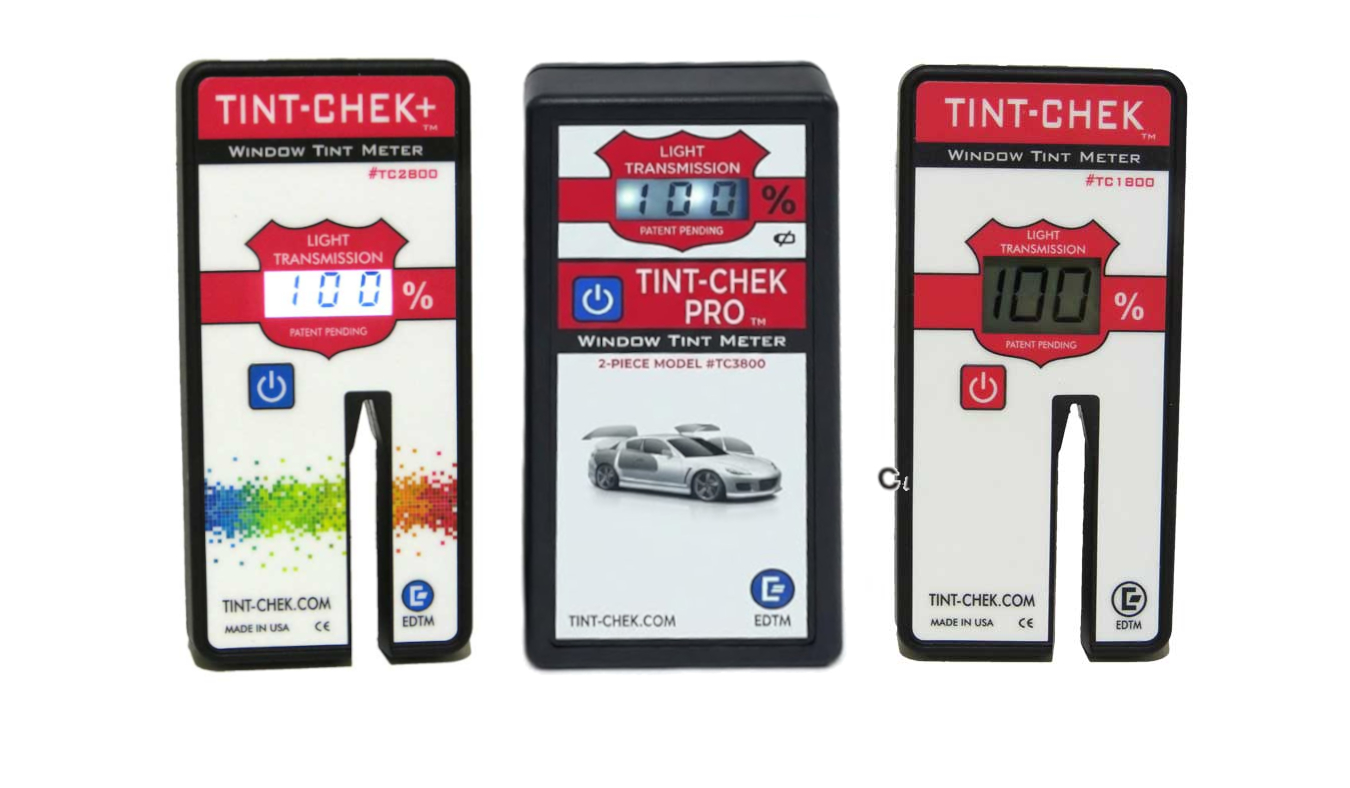
The TC3800 was introduced as a two-piece design when some state laws began requiring light transmission checks during inspection, according to an EDTM executive quoted in AGRR magazine. A Maryland State Police bulletin on approved window tint meters for vehicle safety inspections lists the Tint-Chek Pro. Check your own state's approved-meter list if you operate under one.
A repeatable workflow
1. Clean the glass area to be tested.
2. Verify the meter against its calibration standards. For the TC3800, two standards of about 27% and 59% VLT are supplied.
3. Test each window and take more than one reading.
4. Record the results.
5. Store the meter in its case.
Learn how to calibrate and verify a digital tint meter in EDTM's guide.
Record-keeping
Suggested fields:
|
Field |
Purpose |
|
Date and time |
When the test took place |
|
Vehicle ID |
VIN, plate, or fleet number |
|
Window position |
Which glass was tested |
|
Reading |
The measured VLT |
|
Meter model and serial |
Identifies the instrument |
|
Verification check done |
Shows the meter was checked |
|
Operator |
Who ran the test |
Keep records in a consistent system so they can be found if there is a question later. Follow your local rules on how long to keep them.
Training your staff
Everyone who tests should follow the same steps. Write a one-page procedure and practice on a few vehicles first.
Frequently asked questions
Do I need a different meter for the windshield?
You need a two-piece meter for windshields and rear windows.
How often should I verify the meter?
Follow the manual for your model.
Do I have to keep test records?
Check the requirements for your state or agency. Keeping records is good practice either way.