
Knowledge Center
Can a Tint Meter Read Ceramic Window Film?
Short answer: Yes. A tint meter for ceramic window film reports visible light transmission (VLT), the share of visible light that passes through the glass and film. VLT is the same measurement whatever the film technology, so ceramic film is read the same way as dyed or other film.
What the meter does and does not measure
A tint meter measures visible light only. The TC3800 Tint-Chek PRO user guide lists a 550 nanometer wavelength, in the visible range. That is why it can tell you how dark the window is.
It does not measure how much heat the film rejects. Ceramic film is usually chosen for its heat and infrared performance, and a VLT meter cannot show that. Two films with the same VLT reading can perform differently on heat.
If you need to show infrared or UV performance, use a different instrument. EDTM's Window Energy Profiler, for example, displays UV, visible light, and infrared transmission values for installed windows.
How to read ceramic film correctly
1. Clean the glass. Dirt can affect results.
2. Use a meter rated for the glass-plus-film thickness. EDTM lists its Tint-Chek meters for glass and film up to 1/4 inch (6.5 mm).
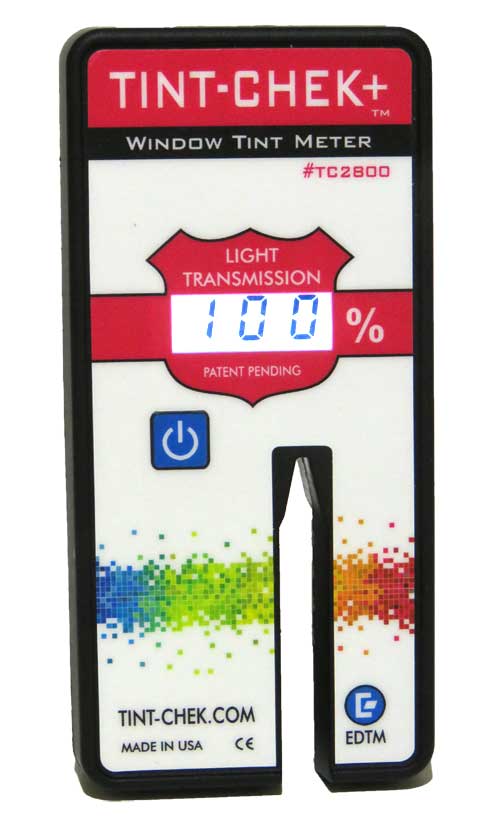
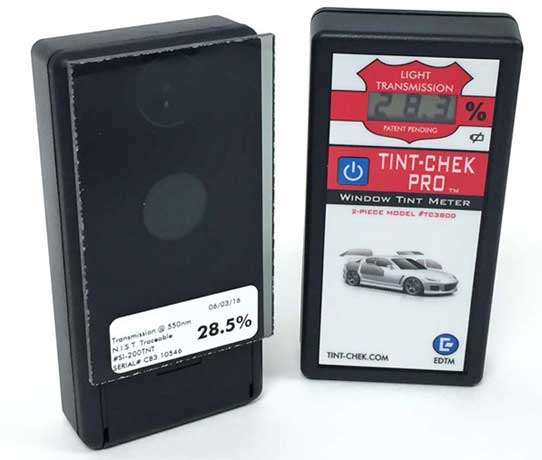
3. Pick the right design. The TC2800 tint meter fits over lowered side glass, while the TC3800 two-piece design also reaches windshields and rear windows.
4. Check the meter with its calibration standards.
5. Take more than one reading and record the result.
To see the full method, read how window tint is measured.
Frequently asked questions
Will ceramic film give a different VLT reading than other film?
Only if its visible light transmission is different. The meter reports visible light that passes through, not the film's chemistry.
Can a tint meter tell me if a film is ceramic?
No. It reports VLT and nothing about the film's material.
Can a tint meter show heat rejection?
No. Use an instrument that measures infrared or total solar values.