
Knowledge Center
Window Tint Meter: How to Measure Tint & VLT Accurately
Quick Answer
A window tint meter measures VLT (Visible Light Transmission) by shining a calibrated light through glass and reading how much passes through to a sensor on the other side. It instantly displays the tint percentage, giving installers, shop owners, and inspectors a fast, accurate, and legally reliable way to confirm tint darkness — something visual estimation simply can't provide.
If you've ever needed to confirm exactly how dark a car window is, a window tint meter is the tool that makes it possible. Whether you're an installer verifying your own work, a shop owner double-checking a customer's vehicle, or an inspector confirming legal compliance, accurate readings depend on using the right equipment — not guesswork. Below, we'll break down what a window tint meter is, how it works, and how to use one correctly to get precise, repeatable results every time.
What Is a Window Tint Meter?
A window tint meter is a handheld device that measures the percentage of visible light passing through tinted glass. This measurement — VLT — is the industry-standard way of describing how dark or light a tint film is. A lower VLT percentage means darker tint, since less light can pass through, while a higher VLT percentage means lighter, more transparent tint.
To put it in concrete terms: a film rated at 5% VLT is extremely dark, often called "limo tint," while a 50% VLT film is much lighter and closer to untinted glass. A window tint meter removes the guesswork from this description entirely. Instead of eyeballing a window and guessing whether it "looks dark enough," you get an exact, repeatable number every time — which is critical whether you're running a tint shop, performing vehicle inspections, or simply confirming your own car meets local regulations.
Why VLT Accuracy Matters
Accurate VLT readings aren't just a technical nicety — they carry real legal and financial consequences. Most states and regions enforce specific VLT limits for windshields, front side windows, rear side windows, and rear windshields, and getting this wrong can lead to fines, failed inspections, or costly rework.
Beyond compliance, accuracy matters for a few other practical reasons:
- Customer trust: Installers need to confirm that the tint they applied matches exactly what the customer paid for and requested.
- Quality control: Shops that don't verify VLT risk inconsistent results across vehicles, which can damage their reputation over time.
- Resale and registration: Vehicles with non-compliant tint levels can run into problems during resale inspections or registration renewals, creating headaches for the vehicle owner down the line.
Because so much rides on getting an accurate number, relying on visual judgment, printed comparison charts, or generic smartphone apps isn't a reliable option for anyone doing this professionally or for legal purposes.
How a Window Tint Meter Works
At a technical level, a tint meter works by emitting a calibrated light source from one side of the glass while a sensor on the opposite side measures how much of that light successfully passes through. The device then calculates the ratio of light received to light emitted and displays it instantly as a VLT percentage on its screen.
This process happens in just a few seconds and removes virtually all subjectivity from the measurement. Because the light source and sensor are calibrated, the reading stays consistent regardless of who is using the device, what time of day it is, or how bright the surrounding environment happens to be — all factors that can throw off manual estimation methods significantly.
Step-by-Step: How to Measure Tint with a Meter
Here's exactly how the process works in practice:
- Select a flat section of glass. Avoid curved edges or areas close to the window frame, since these spots can distort the reading.
- Power on the meter and allow it to auto-calibrate, if your model requires this step.
- Position the sensor and light source on opposite sides of the glass, making sure both sit firm and flush against the surface.
- Read the VLT percentage displayed on the meter's screen.
- Repeat the process on each window, since front, rear, and side windows are frequently tinted at different darkness levels.
The entire process typically takes only a few seconds per window, which is exactly why tint meters have become the standard tool across the tinting and vehicle inspection industry.
Manual Estimation vs. Using a Tint Meter
Not all measurement methods are created equal. Here's how they compare:
| Method | Accuracy | Legally Reliable | Speed |
|---|---|---|---|
| Visual estimation | Low | No | Instant, but unreliable |
| Comparison charts | Low–Medium | No | Slow |
| Smartphone apps | Medium | No | Fast, but inconsistent |
| Dedicated tint meter | High | Yes | Fast and precise |
As the table illustrates, a dedicated meter is the only method that consistently produces accurate, defensible results — a crucial distinction for inspectors, law enforcement, and any professional whose measurements need to hold up to scrutiny.
Choosing the Right Window Tint Meter
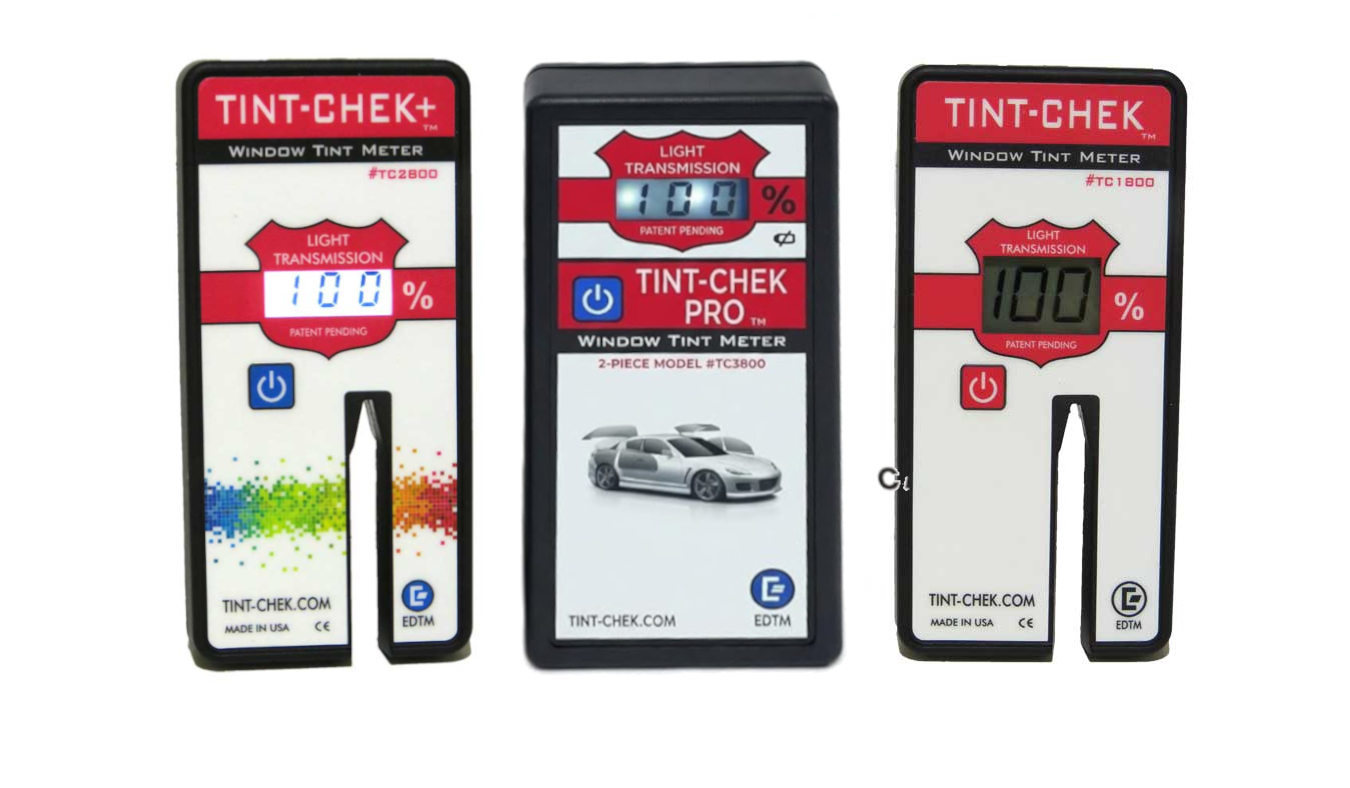
Not every user has the same needs, which is why choosing the right tool matters. EDTM offers a range of automotive tint meters designed for different experience levels and use cases:
- If you're just getting started or only need occasional VLT checks, the entry-level window tint meter offers straightforward, accurate readings without unnecessary complexity or cost.
- For shops and professionals who need consistent, reliable performance day after day, the professional-grade tint meter for accurate VLT readings strikes a strong balance between precision and ease of use.
- For high-volume shops, inspectors, or anyone who needs the highest level of measurement precision available, the advanced window tint meter delivers enhanced accuracy along with additional functionality built for demanding, everyday use.
Whichever option fits your situation, having a dedicated tool on hand ensures your readings are always accurate, consistent, and ready to stand up to inspection.
Common Mistakes to Avoid
Even with a quality meter in hand, a few common errors can still affect your results:
- Measuring too close to the window's edge, where tint film application is often less even.
- Skipping glass cleaning before measuring, since dirt or residue can slightly skew light transmission readings.
- Using outdated or uncalibrated equipment, which can drift out of accuracy over time without regular checks.
- Relying on visual judgment instead of an actual meter reading, especially in situations where the result needs to hold up legally.
Avoiding these simple mistakes goes a long way toward ensuring every VLT reading you take is as accurate and trustworthy as possible.
Frequently Asked Questions
How is tint measured?
Tint is measured using VLT (Visible Light Transmission), expressed as a percentage. A window tint meter calculates this by shining light through the glass and measuring how much reaches a sensor on the opposite side.
How do you measure window tint without guessing?
The only reliable way is with a dedicated window tint meter. Visual estimation, comparison charts, and smartphone apps are all inconsistent and not considered legally reliable.
Can I measure tint on my own car at home?
Yes. As long as you have access to a tint meter, the same simple process — placing the sensor and light source on opposite sides of the glass — works for personal vehicles just as it does for professional use.
A window tint meter takes the guesswork out of measuring tint darkness, giving installers, shop owners, and inspectors a fast, reliable way to confirm VLT accuracy. Whether you need a simple entry-level option or a professional-grade tool for daily use, choosing the right tint meter ensures your results are consistent, defensible, and accurate every time.
Explore our full range of automotive tint meters to find the right fit for your needs.