
Knowledge Center
Low-E Detector for Window Manufacturers: Quality Control Checks Before Glass Goes in the Frame
In manufacturing, a wrong piece of glass costs more the later it is found. A sheet without coating, the wrong coated surface, or a missed edge can end up in a finished unit and become a warranty problem. A reliable Low-E detector at the right checkpoints helps you catch these problems early.
Where Quality Control Checks Belong
1. At receiving: confirm incoming sheets match the order.
2. Before cutting: verify coating presence and the correct side.
3. After edge deletion: confirm the coating has been removed at the edge where your process requires it.
4. Before assembly: confirm each lite is correct before it goes into the unit.
Tools for the Production Floor
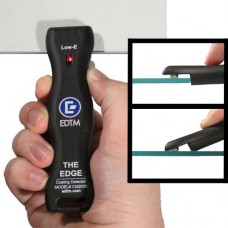
The EDGE for coating and edge deletion checks
EDTM's The EDGE Low-E Coating & Edge Deletion Detector is designed for glass and window manufacturers and is described as an inexpensive option shaped for hand comfort. It checks for Low-E coating and for edge deletion, which makes it useful at more than one checkpoint.
Contact meter for single sheets
The Low-E Contact Meter detects any conductive surface, including Low-E coatings on single sheets of glass. You press it against the glass to find out whether the surface you are touching is coated. It is also designed for glass and window manufacturers.
Other manufacturing detectors
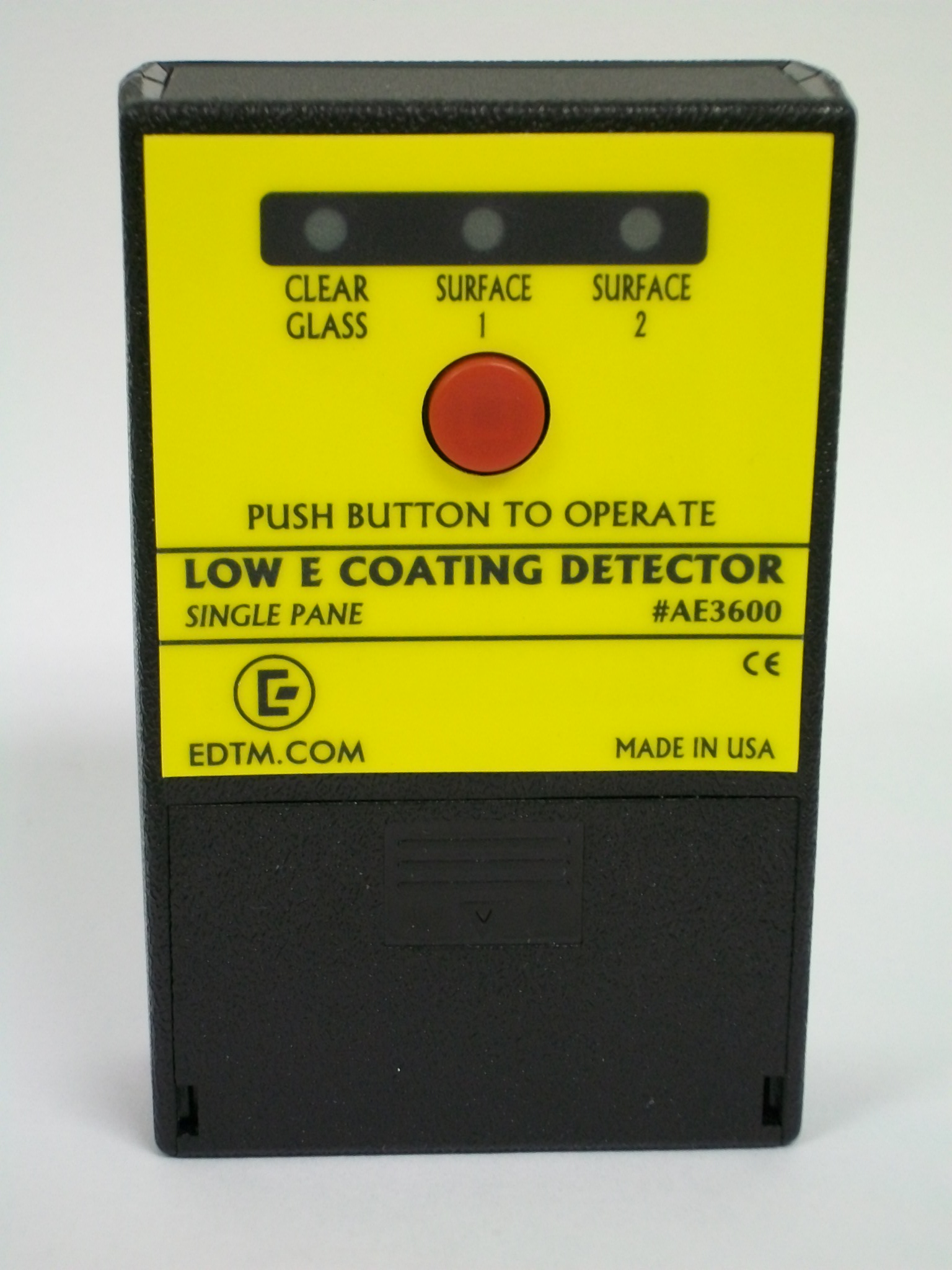
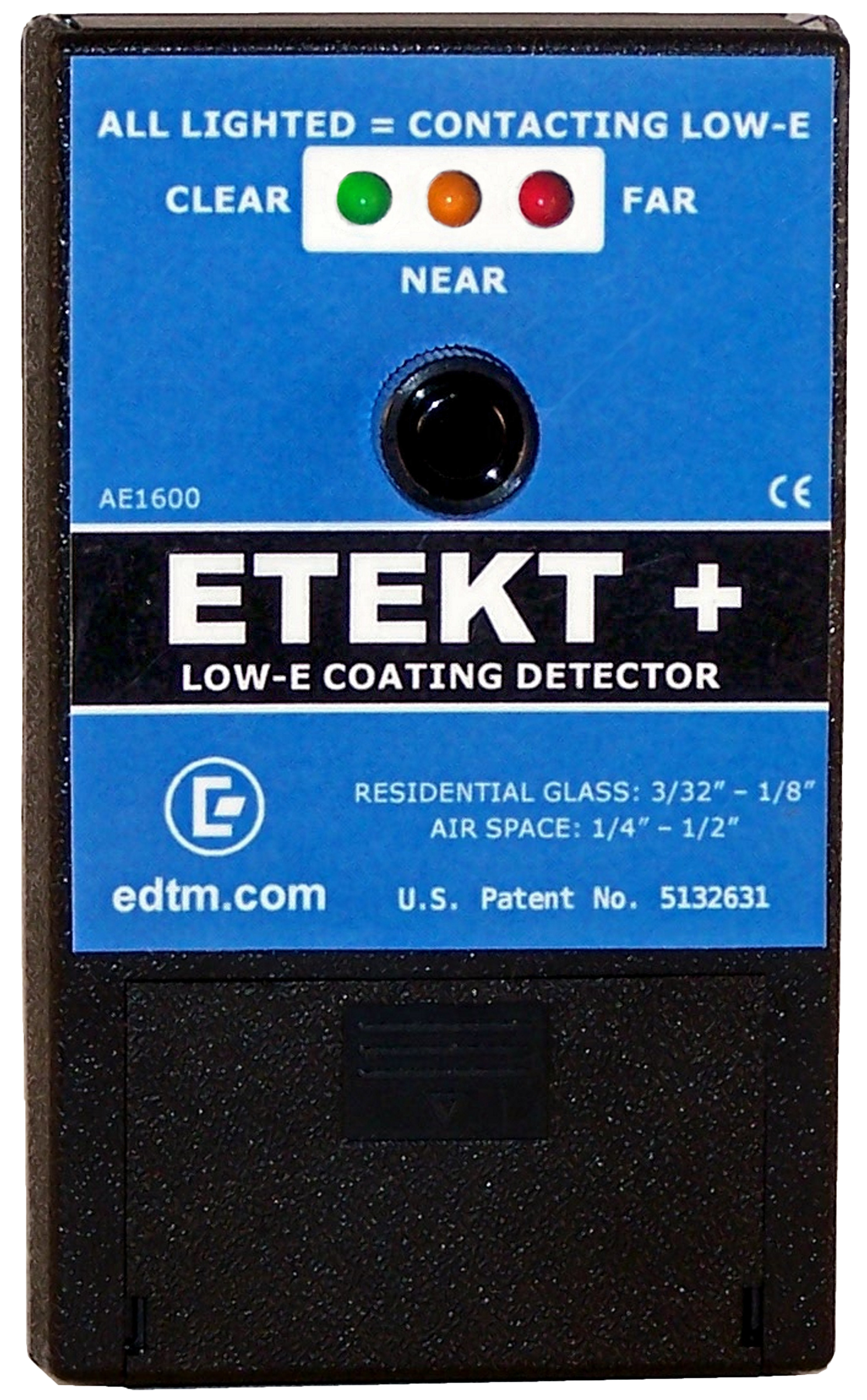
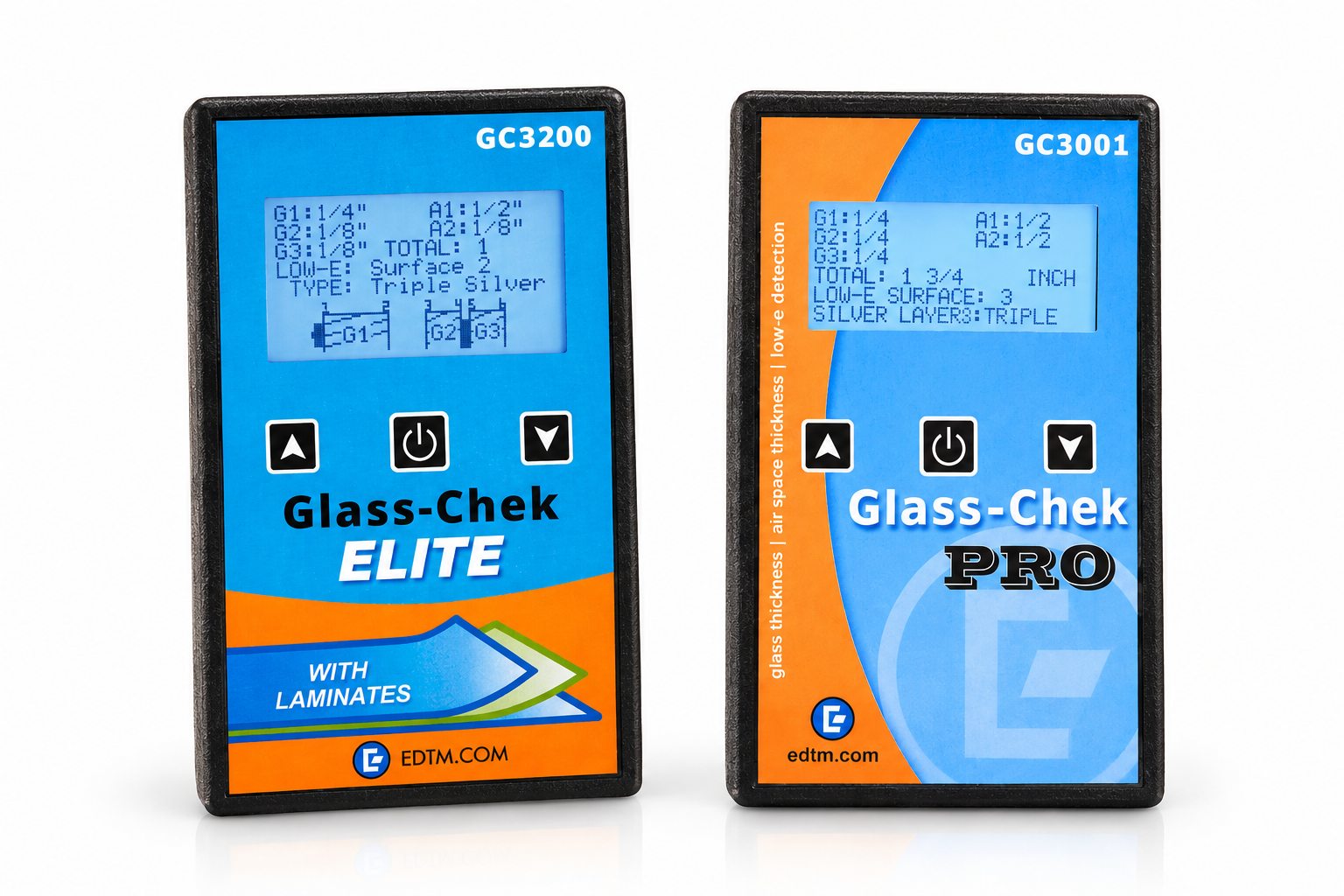
EDTM's manufacturing category also includes the AE1601 ETEKT+ Low-E Detector, the AE3600 Single Pane Low-E Detector, and the GC3200 and GC3001 Glass-Chek meters for glass thickness work.
Build a Simple Quality Control Routine
• Assign who tests, where, and how often.
• Record each check with date, operator, and result.
• Quarantine any sheet that fails until it is resolved.
• Review failures to find the source, such as a supplier or a handling step.
What Can Go Wrong Without Checks
• An uncoated sheet is assembled into a unit that should be coated.
• A coated surface ends up in the wrong position.
• Edge deletion is missed, which can cause problems later in the finished unit.
• Incorrect glass is not caught until the unit has already been installed.
A Sample Checkpoint Table
|
Checkpoint |
What to check |
What to record |
|
Receiving |
Coating present on incoming sheets |
Lot, date, result |
|
Before cutting |
Correct coated side identified |
Operator, result |
|
After edge deletion |
Coating removed at the edge as required |
Operator, result |
|
Before assembly |
Each lite matches the order |
Unit ID, result |
Edge deletion is the removal of the coating around the perimeter of a lite so that the edge seal of an insulated unit bonds properly to the glass.
Choosing Between Tools
• The EDGE: checks coating and edge deletion, useful at several checkpoints.
• Low-E Contact Meter: a simple way to check single sheets for a conductive surface.
• ETEKT+: an established detector in the manufacturing category.
• AE3600: designed for single pane glass and checks both surfaces with one test.
Train Operators Consistently
1. Show each operator how to use the tool they will carry.
2. Practice on known coated and uncoated samples.
3. Explain what to do when a sheet fails, including who to notify.
4. Review the records weekly to spot patterns.
Frequently Asked Questions
Can the same tool check coating presence and edge deletion?
EDTM describes The EDGE as a Low-E coating and edge deletion detector.
Are the contact meter and The EDGE for consumers?
No. EDTM labels both for glass and window manufacturers only.
What is edge deletion?
The removal of the Low-E coating around the edge of a lite so that the insulated unit's edge seal bonds correctly to the glass.