
Knowledge Center
How Do You Measure the Thickness of Double-Pane Glass?
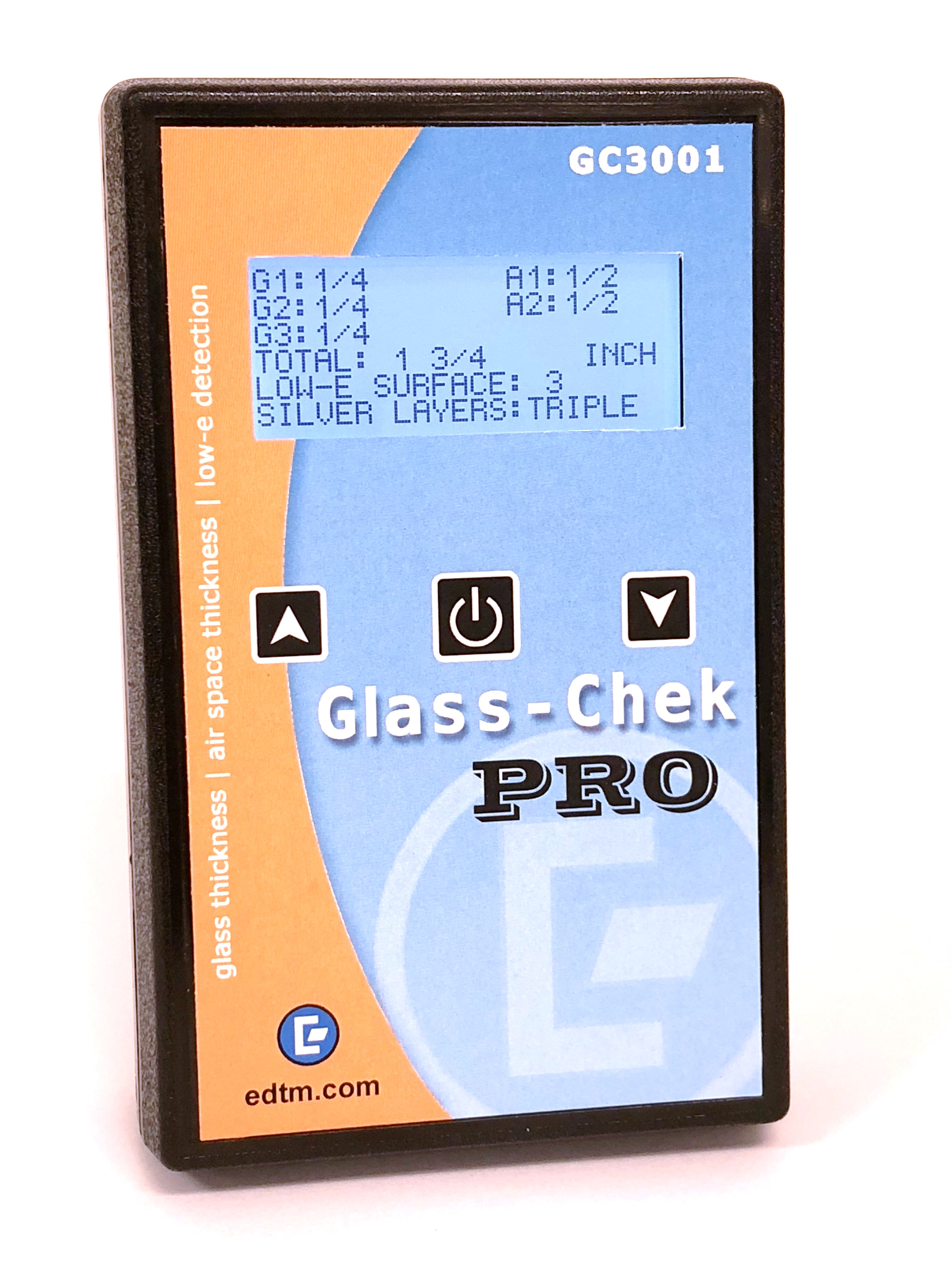
Short answer: use a glass thickness meter that reads a sealed double-pane unit in place. A tool such as the EDTM Glass-Chek PRO reports the thickness of each pane of glass, the air space between them, and the overall unit thickness from a single measurement, with no disassembly.
Key Takeaways
• A double-pane unit has several thicknesses worth knowing: each pane, the air space, and the overall insulated glass (IG) thickness.
• A glass thickness meter measures all three in a sealed unit, including one already installed in a window.
• Take the reading at the bottom center of the window, the most accurate and repeatable location.
• Record Low-E information at the same time if you are ordering replacement glass.
What You Are Actually Measuring
Asking howdo you measure the thickness of double-pane glass can mean different things, so start by deciding which number you need. A double-pane unit is a sandwich, and each layer matters when you order or inspect glass:
• Glass thickness of the outer pane and the inner pane
• Air space thickness between the two panes
• Overall IG thickness, the total of glass and air space
• Low-E coating type and location, if the glass is coated
Ordering a replacement from only the overall thickness can go wrong, because two units with the same overall thickness can be built from different glass and air space combinations.
The Best Way: Measure the Sealed Unit With a Meter
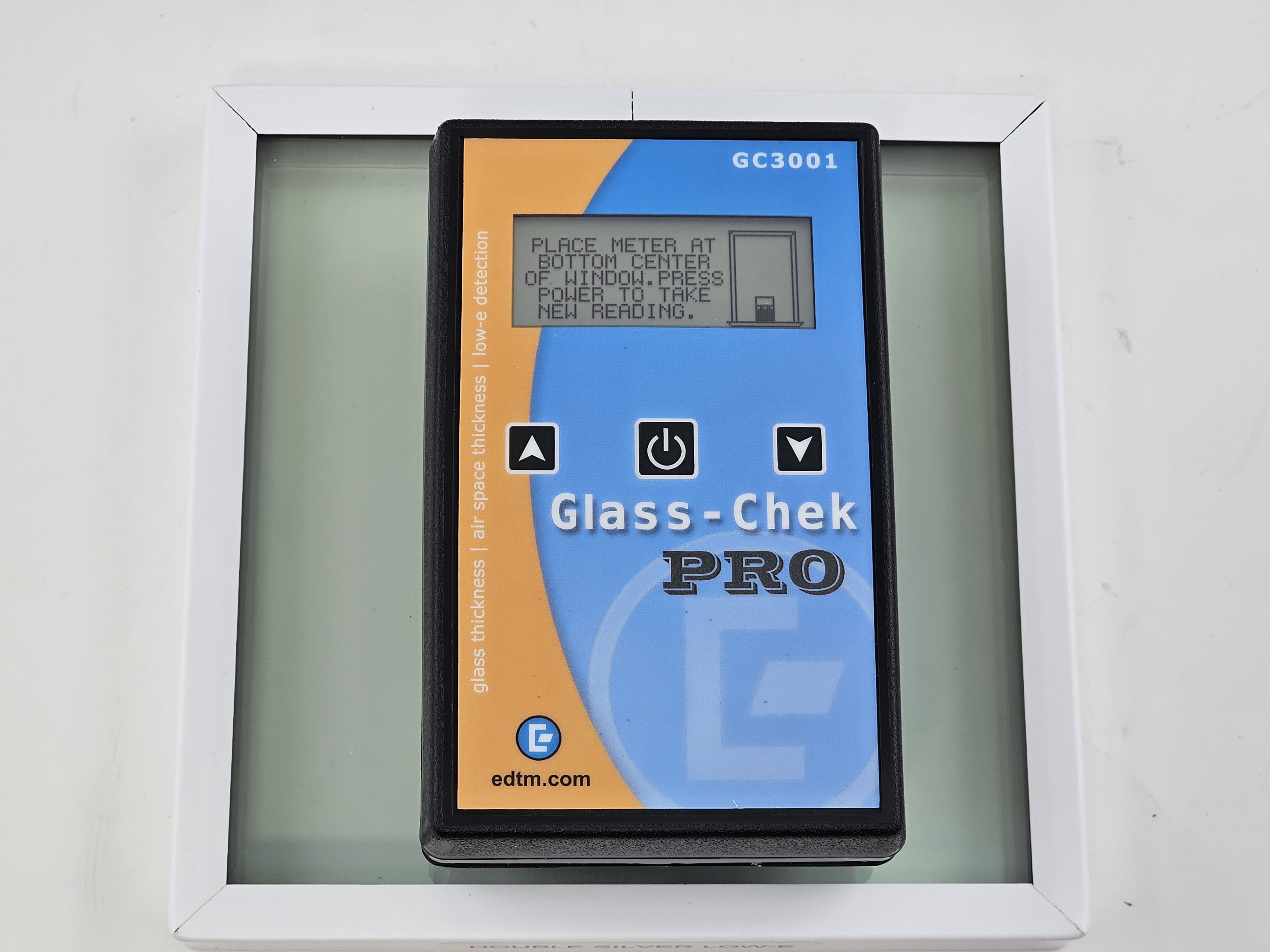
A glass thickness meter is designed for this job. EDTM’s Glass-Chek PRO measures glass, air space, and overall IG thickness of double and triple pane windows with a single push of a button, and it works on windows already installed in the field as well as units in production. It has an expanded thickness range of approximately 2 inches and works with residential and commercial glass.
Step-by-Step
1. Power on the meter and check that the operating mode matches your job. The welcome screen shows the current mode.
2. Choose your units. The meter can show actual values or values rounded to ASTM standards in fractions of an inch, thousandths of an inch, decimal millimeters, and more.
3. Place the meter at the bottom center of the window. EDTM notes this is the most accurate and repeatable measurement location.
4. Take the measurement and use the arrow keys to move through the result screens at your own pace.
5. Write down each value, along with any Low-E result, on your work order.
Can You Measure Without a Meter?
If you have a loose unit with an exposed edge, you can measure its overall thickness at the edge with a standard measuring tool. That gives you one number only. It will not separate the air space from the glass, and on an installed window the edge is usually hidden inside the frame. For a complete breakdown, a meter that reads through the glass is the practical choice.
Why the Breakdown Matters
• Replacement orders. The Glass-Chek PRO is designed so one button push tells you the exact replacement IG unit to order, which helps reduce incorrect orders.
• Low-E matching. Using the wrong Low-E coating can hurt a window’s energy performance and make it look different from the rest of the building.
• Inspection and documentation. Inspectors and surveyors can record what is actually in a building.
Which Tool for Which Situation
|
Situation |
Tool to look at |
|
Double or triple pane, Low-E, replacement ordering |
Glass-Chek PRO (GC3001) |
|
Laminated glass identification and inner layer thickness |
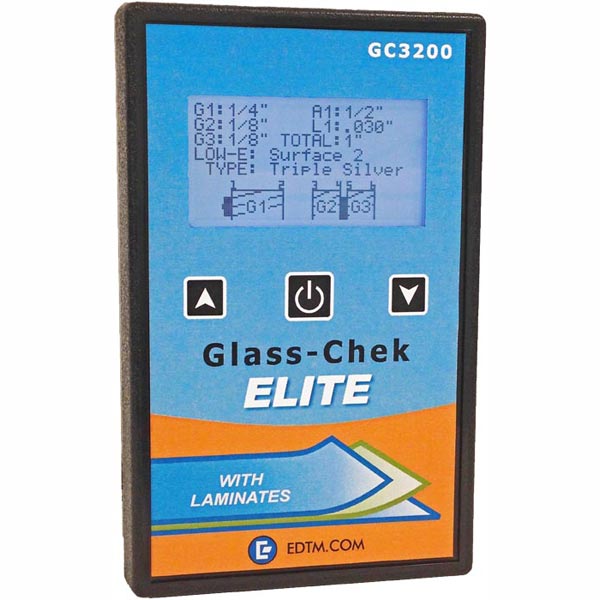
Glass-Chek ELITE (GC3200) |
|
Another EDTM option |
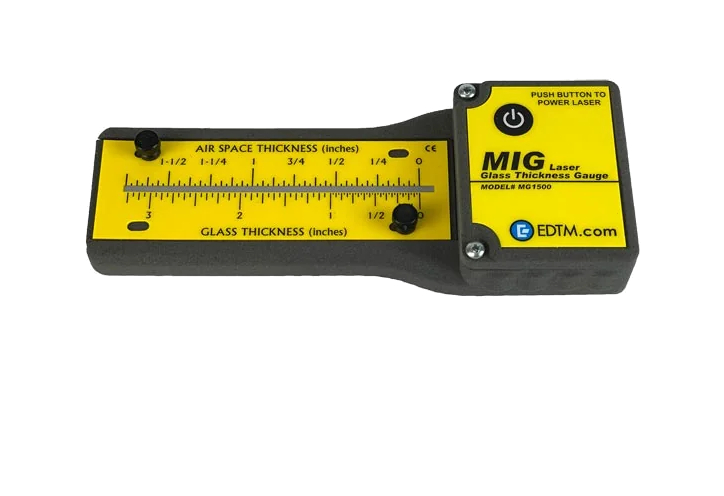
The MG1500 MIG thickness gauge: review its product page for specifications |
Special Glass: Triple Pane, Tinted, Suspended Film, and Laminated
The same approach extends beyond a standard double-pane unit. The Glass-Chek PRO measures glass, air space, and overall thickness of triple pane windows in one push, and EDTM lists compatibility with tinted glass, suspended film such as Heat Mirror, and newer Low-E coatings. For laminated glass, the PRO displays total thickness, and the Glass-Chek ELITE identifies the laminate and measures its inner layer.
Common Mistakes When Measuring Double-Pane Glass
• Recording only the overall thickness and ordering from it
• Measuring away from the bottom center of the window
• Reading values in the wrong units for your supplier
• Skipping the Low-E result on a coated unit
• Writing results down later from memory instead of at the window
A Record Sheet You Can Copy
|
Field |
Entry |
|
Job and window ID |
|
|
Outer pane thickness |
|
|
Air space thickness |
|
|
Inner pane thickness |
|
|
Overall IG thickness |
|
|
Low-E (type, surface) |
|
|
Units used / meter mode |
|
|
Measured by / date |
|
What Else to Check on a Replacement Job
Thickness is only part of the order. While you are at the window, also note whether the glass is tinted, laminated, or contains suspended film, and what Low-E coating is present. If you know who made the glass, write that down too, because in many cases it helps identify the specific Low-E coating. These details keep a replacement unit consistent with the rest of the building and avoid a visible mismatch.
This article covers the overall method. For the air space specifically, see how to measure air space in an IGU.
Frequently Asked Questions
Do I have to take the window apart to measure the glass?
No. A glass thickness meter measures a sealed unit as it is.
Where on the window should I measure?
At the bottom center, which gives the most accurate and repeatable result.
Can the same tool measure triple pane windows?
Yes. The Glass-Chek PRO measures glass, air space, and overall IG thickness of triple pane windows in one push.
Does it measure Low-E coatings too?
Yes. The Glass-Chek PRO detects Low-E coatings and shows whether a coating is hard coat or soft coat.
Get the Complete Measurement
Measure each pane, the air space, and the overall unit, and record them every time. For an in-place reading of a sealed unit, see EDTM’s glass thickness meter options and match the model to your glass.