Knowledge Center
What's the Difference Between the Low-E CARD and the Low-E CARD+?
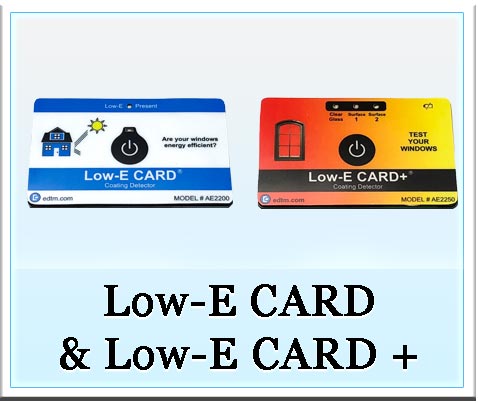
Quick answer: The AE2200 Low-E CARD is a single-surface Low-E meter. It is a disposable model that confirms whether a Low-E coating is present on the surface you test. The AE2250 Low-E CARD+ is a two-sided Low-E meter with a replaceable battery. It checks both sides and tells you whether the coating is on surface 1 or surface 2. Choose the CARD for a simple yes or no, and the CARD+ when the coating location matters. For everyday glazier work, the AE1601 ETEKT+ is the tool EDTM recommends.
Side-by-Side Comparison
| Feature | AE2200 Low-E CARD | AE2250 Low-E CARD+ |
| Type | Single-surface Low-E meter | Two-sided Low-E meter |
| What it tells you | Whether a Low-E coating is present | Whether the coating is on surface 1 or surface 2 |
| Power and test life | Disposable model; allows 1,000 tests | Replaceable battery |
| Listed price* | $69 | $99 |
*Prices were listed on edtm.com at the time of writing. Check each product page for current pricing.
Single-Surface vs. Two-Sided: What's the Difference?
The AE2200 Low-E CARD is a single-surface Low-E meter. It answers one question: is there a Low-E coating on the glass? The AE2250 Low-E CARD+ is a two-sided Low-E meter. It also detects the coating, and it tells you which surface carries it.
What Surface 1 and Surface 2 Mean
In an insulated glass unit, surface 1 is the exterior face of the outer pane and surface 2 is the inside face of that same pane, facing the air space. Knowing which of the two carries the coating helps confirm the unit's orientation. This is the information a two-sided meter like the CARD+ provides.
Which One Should You Choose?
- Choose the Low-E CARD (single-surface) if you only need to confirm that a coating exists and want a simple, disposable tool.
- Choose the Low-E CARD+ (two-sided) if you need to know which surface the coating is on, or you prefer a tool with a replaceable battery.
When the Low-E CARD Is Enough
- You only need to know whether a Low-E coating is present.
- You want a simple, disposable tool for quick checks.
- Your jobs rarely depend on which surface carries the coating.
When the Low-E CARD+ Pays Off
- You need to know whether the coating is on surface 1 or surface 2.
- You want a replaceable battery instead of a disposable tool.
- You use the tool often enough that surface information saves time.
Go Deeper
To see how these cards compare with other detectors, from the ETEKT+ to single pane and manufacturing tools, read the full guide to Low-E glass detection.
Frequently Asked Questions
What is the difference between the AE2200 Low-E CARD and the AE2250 Low-E CARD+?
The AE2200 Low-E CARD is a single-surface Low-E meter that confirms whether a coating is present. The AE2250 Low-E CARD+ is a two-sided Low-E meter that also tells you whether the coating is on surface 1 or surface 2.
How many tests does the Low-E CARD allow?
EDTM states that the disposable AE2200 Low-E CARD allows 1,000 tests.
Does the Low-E CARD+ have a replaceable battery?
Yes. The AE2250 Low-E CARD+ is described as having a replaceable battery design.
Which Low-E detector is best for everyday glazier work?
For everyday glazier work, EDTM points to the AE1601 ETEKT+, a long-standing option in the field.
Ready for Everyday Glazier Work? Choose the AE1601 ETEKT+
The Low-E CARD and CARD+ are good for quick checks. If you detect Low-E glass on the job regularly, the AE1601 ETEKT+ is the long-standing option EDTM recommends for glaziers. Match the tool to the glass and the question you need answered, and for most daily glazier work that tool is the ETEKT+.
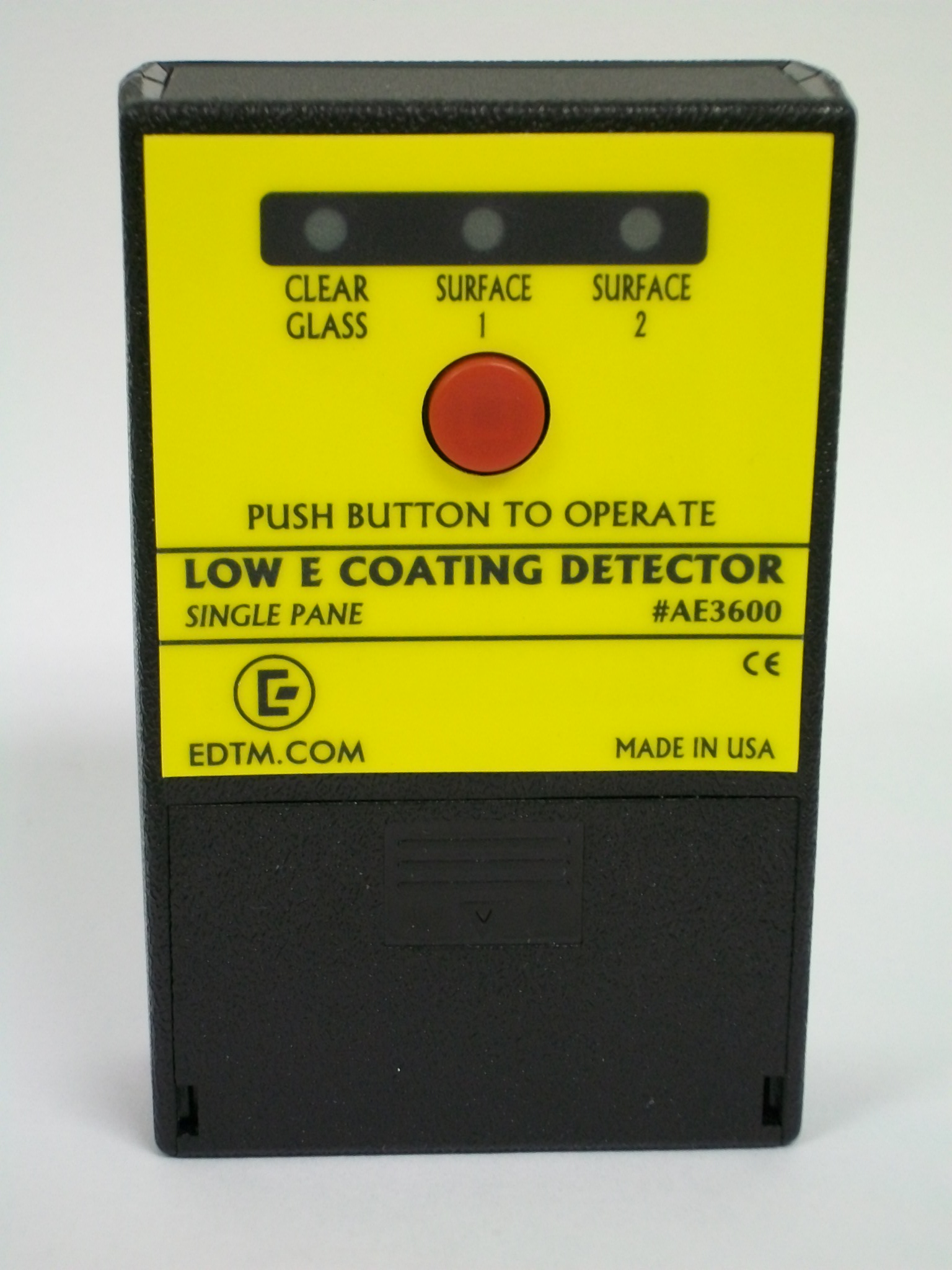
For single pane glass, EDTM also offers the AE3600 Single Pane Low-E Detector.
Shop the AE1601 ETEKT+ on edtm.com