
Knowledge Center
Window Energy Profiler: How to Test Installed Windows for SHGC, UV, and Visible Light
A window's energy performance is easy to claim and hard to prove. Labels and brochures describe how a window should perform, but the glass in a customer's home, on a job site, or in a client's building is the glass that actually matters. The Window Energy Profiler from EDTM closes that gap. It tests installed windows in the frame and shows four real-time measurements: the estimated solar heat gain coefficient (SHGC) and the UV, visible light, and infrared transmission values.
The current model is the WP4501, the updated version that replaces the WP4500. This guide explains what it measures, how a typical test works, and where it fits in sales, quality control, and energy auditing.
What the WP4501 Measures
The WP4501 has an opening large enough to fit over the window sash of an installed window, so you can test a window where it sits. Four values appear at the same time:
• Estimated SHGC: the share of solar heat that passes through the window, on a scale from 0 to 1. A lower number means less solar heat gain.
• UV transmission: the percentage of ultraviolet light passing through the glass. UV is one of the factors behind fading of furniture, flooring, and fabrics.
• Visible light transmission: how much daylight passes through. Higher values mean a brighter interior.
• Infrared transmission: the percentage of infrared energy passing through the glass.
The unit also calibrates itself automatically. Transmission readings revert to 100% and SHGC reverts to 1.00, so every test starts from a known baseline.
How to Test an Installed Window
Always follow the WP4501 user manual for positioning. In general, a test looks like this:
1. Choose the window and clean the glass so dust or smudges do not affect the reading.
2. Fit the profiler over the window sash as shown in the manual.
3. Read the four values on the display. Press the hold button if you are reaching and cannot see the screen, or if you want to keep the numbers up while you explain them to a customer.
4. Record the readings along with the window location and the date.
5. Repeat on other windows, or on a replacement window sample, and compare the numbers.
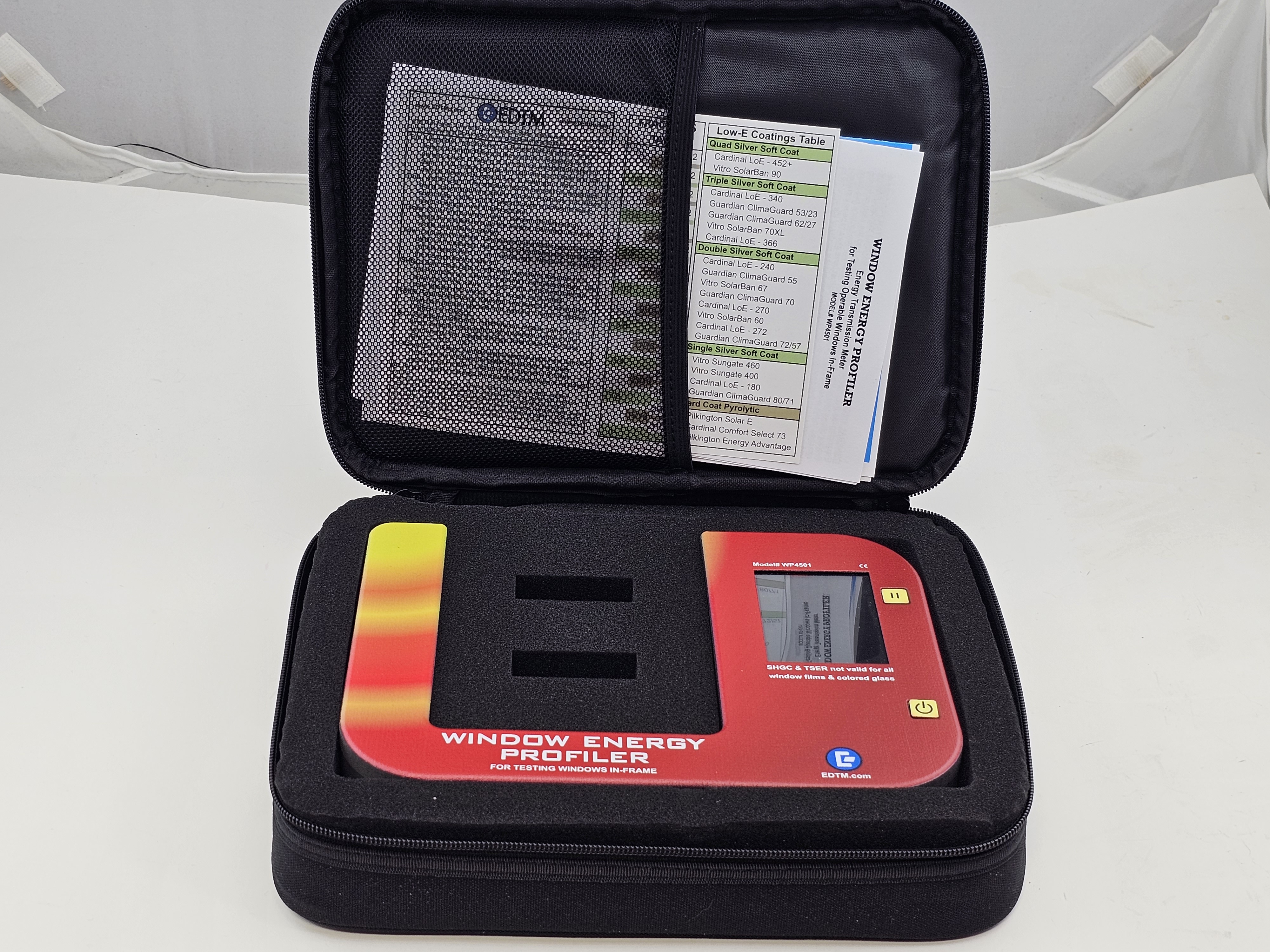
The WP4501 shuts off automatically to save power and runs on a standard 9-volt alkaline battery, which is easy to find and replace. It has a handle for easy handling and ships with a padded carrying case.
An Important Limit: SHGC on Film and Colored Glass
Accuracy note: SHGC measurement is not valid on window film or colored glass. If the window you are testing has film applied or tinted glass, do not present the SHGC number as a valid measurement.
Where the Window Energy Profiler Fits
Replacement window sales
Testing the existing windows in a home helps determine whether replacement windows are needed. Comparing the existing performance to the replacement window gives the customer quantifiable evidence of what will change: energy performance, UV exposure, and natural daylight. EDTM also offers the Window Profiler Sales Brochure, a guide to selling your window's energy performance alongside the tool.
Portable quality control
Test windows at the job site before installation. Catching an incorrect window before it goes in prevents time-consuming and expensive rework.
Energy auditing in the field
For energy auditors, the profiler measures the performance characteristics of windows already installed in a building.
Identifying Low-E coatings
By comparing a window's measured numbers to manufacturer data sheets, you can determine which type of Low-E coating the window has. This works in production and in the field.
Make the Demonstration Complete
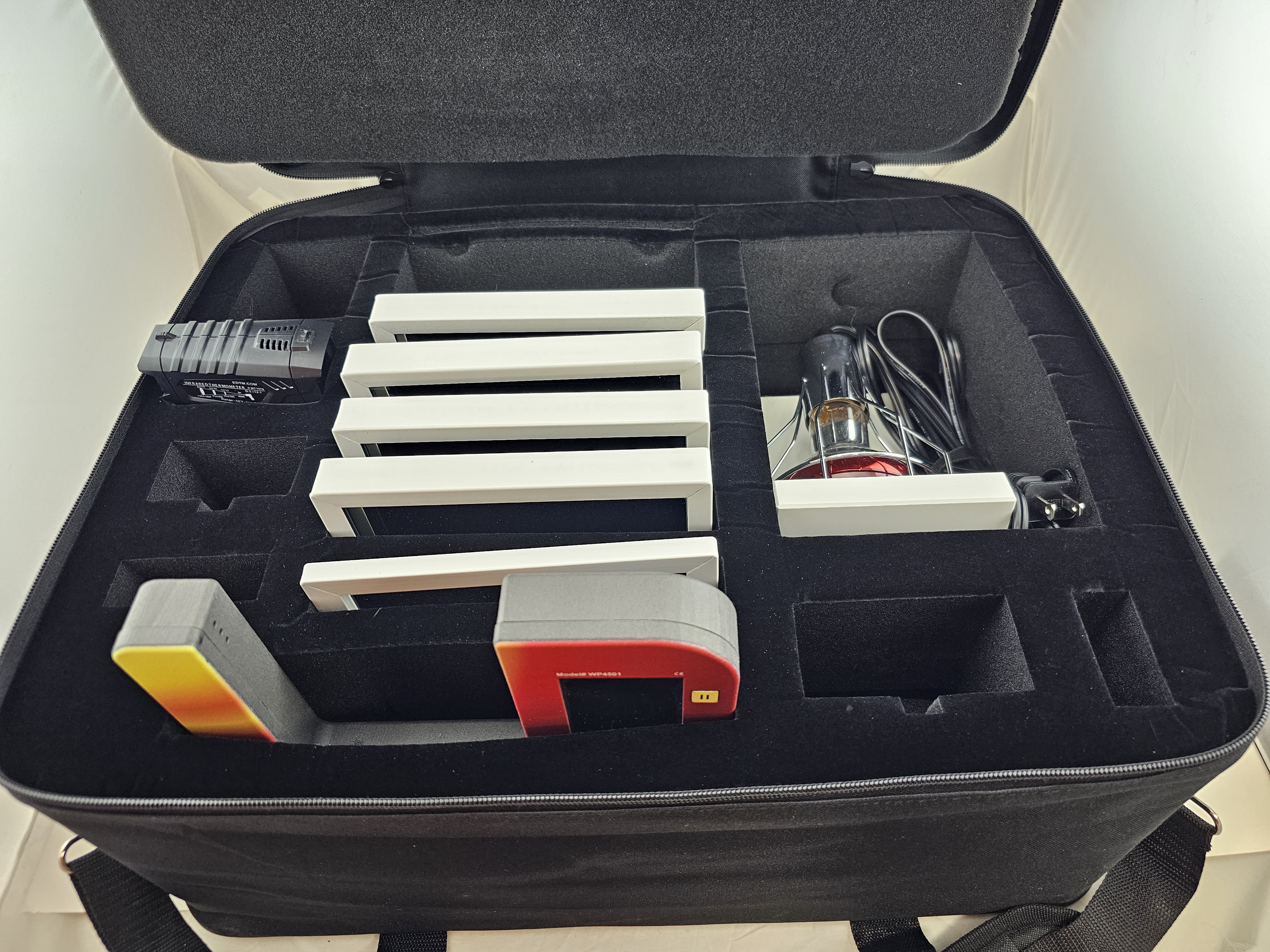
If you sell windows, a measuring tool works best inside a full presentation. Browse EDTM's window sales tools to see the profiler alongside other demonstration products, or consider the SK1740 Window Energy Profiler Kit, which EDTM built to deliver a thorough, compelling demonstration to customers.
Tips for Reliable Readings
• Test more than one window. Glass can differ between rooms, additions, and replacement projects, so one reading rarely tells the whole story.
• Record the details. Note the room, the orientation, and the date next to each reading so your results are easy to review later.
• Check for film, tint, or coatings first. Knowing what is on the glass helps you explain the numbers correctly and avoid presenting an invalid SHGC value.
• Keep the glass clean. Dust and smudges can change what light does as it passes through.
• Keep a spare 9-volt battery in the case. The unit uses a standard alkaline battery, so a spare is inexpensive insurance on a busy day.
Explaining the Numbers Without Overselling
The most persuasive way to use the profiler is to compare. Show the reading for the existing window and the reading for the replacement, and let the difference speak. Explain each value in plain language: SHGC describes how much solar heat gets through, UV transmission relates to fading, visible light relates to daylight, and infrared relates to heat. Avoid promising a specific dollar saving, since real-world results depend on the building, the climate, and how the home is used.
Who Uses the WP4501
The profiler serves window dealers and installers who need to demonstrate performance, manufacturers and installers who want a portable check before windows go in, and energy auditors who assess installed windows in the field. Because it tests windows in place, the same tool works in a showroom, on a job site, or in a customer's living room.
Frequently Asked Questions
What is the difference between the WP4501 and the WP4500?
The WP4501 is the updated Window Energy Profiler and replaces the WP4500.
What battery does the Window Energy Profiler use?
A standard 9-volt alkaline battery.
Can it test windows without removing them from the frame?
Yes. Its opening fits over the sash of an installed window, so you test the window in place.
Does the Window Energy Profiler need to be calibrated before each test?
The WP4501 calibrates automatically. Measurements revert to 100% for transmission and 1.00 for SHGC, so each test starts from a known baseline.
Who should use the WP4501?
Replacement window sellers, window installers, manufacturers doing quality control, and energy auditors working in the field.