
Knowledge Center
The Complete Guide to Low-E Glass Detection: Tools, Methods, Coating Surfaces, and Use Cases
Key takeaways: Low-E coatings are nearly invisible, so you need a method to confirm they are present and to find out which glass surface carries them. Conductivity-based detectors give a quick answer in the shop or the field. Surface-identifying tools tell you whether the coating sits on surface 1 or 2. Single pane, manufacturing, and replacement work each have a tool built for the job.
Low-E glass looks like clear glass, and that is the problem. Install the wrong glass, flip an insulated glass unit, or order a replacement without knowing what was there, and a costly mistake follows. This guide explains what Low-E coatings are, how detection works, and how to choose the right tool.
What Is Low-E Glass?
Low-E stands for low emissivity. A Low-E coating is a microscopically thin layer applied to glass that reduces radiative heat transfer while letting visible light through. Coatings are commonly described as soft-coat (sputtered) or hard-coat (pyrolytic), and both are applied to glass surfaces rather than being part of the glass itself. Low-E glass is widely used in insulated glass units (IGUs) to improve a window's energy performance.
Understanding Glass Surface Numbers
Surfaces in an insulated glass unit are numbered from the outside in:
• Surface 1: the exterior face of the outer pane
• Surface 2: the inside face of the outer pane, facing the air space
• Surface 3: the air-space face of the inner pane
• Surface 4: the room-side face of the inner pane
Where the coating sits affects how the window performs, so knowing the surface matters as much as knowing a coating exists.
How Low-E Detection Works
Visual and flame reflection checks
Some glaziers look at reflections of a small light source or flame in the glass, since a coated surface changes the look of its reflection. These checks depend on judgment and conditions, so they are better for a quick suspicion than a confirmed result.
Conductivity-based detectors
Low-E coatings are conductive layers, and detectors can sense that. EDTM's contact meters and detectors give a clear indication of whether the surface they touch has a coating, removing the guesswork.
Surface-identifying tools
Some detectors go a step further and tell you which surface carries the coating. That helps confirm the orientation of a unit or match a replacement.
Which Tool Fits Which Job
|
Tool |
Best for |
What EDTM says about it |
|
AE2200 Low-E CARD |
Quick checks for coating presence |
Disposable; allows 1,000 tests; confirms whether a Low-E coating is present |
|
AE2250 Low-E CARD+ |
Presence plus surface location |
Replaceable battery; differentiates whether the coating is on surface 1 or surface 2 |
|
AE1601 ETEKT+ |
Everyday glazier use |
Third-generation design; the industry standard for glaziers worldwide for over 30 years |
|
AE3600 Single Pane Low-E Detector |
Single pane glass |
Checks both surfaces of single pane glass with one test from a single side |
|
CM1030 Low-E Contact Meter |
Manufacturers |
Detects any conductive surface, including Low-E coatings on single sheets of glass |
|
CM2030 "The EDGE" |
Manufacturers |
Low-E coating and edge deletion detector for glass and window manufacturers |
For field service work, start with EDTM's Low-E detectors. The ETEKT+ Low-E Detector is a long-standing choice for glaziers, and the Low-ECARD+ adds surface identification.
Low-E Detection and Ordering Replacement Glass
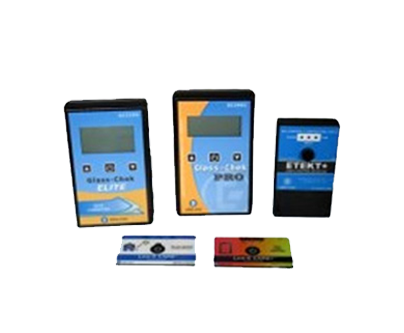
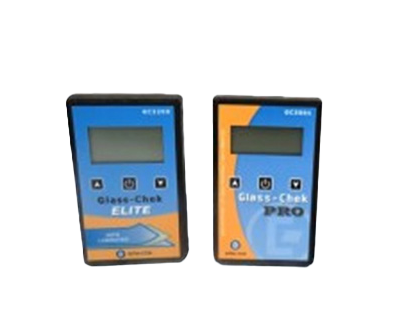
Coating detection is one part of verifying an existing unit. Measuring glass thickness and air space is the other. EDTM's Glass-Chek glass thickness meters are built for that second step. The GC3001 Glass-Chek PRO is designed to tell you the replacement IG unit to order with one button push, and the GC3200 Glass-Chek ELITE now detects laminated glass.
Best Practices for Reliable Detection
1. Clean the glass surface before testing.
2. Test every surface you need to know about, and record the results.
3. Use the tool's instructions, since each detector works slightly differently.
4. Confirm results against manufacturer data or documentation when you are ordering replacement glass.
Why Low-E Detection Matters on Real Jobs
• Ordering replacement glass: a replacement unit should match the coating on the original, so you need to know what is there.
• Checking unit orientation: a coated surface facing the wrong direction changes how a unit performs.
• Quality control: manufacturers need to confirm that every lite is coated correctly before assembly.
• Energy audits and sales: confirming a coating helps explain why one window performs differently from another.
Soft-Coat and Hard-Coat Basics
Low-E coatings fall into two broad families. Soft-coat (sputtered) coatings are applied in a vacuum chamber after the glass is made and are typically protected inside the air space of an insulated unit. Hard-coat (pyrolytic) coatings are applied during glass production and are more durable. Specific performance varies by manufacturer, so consult manufacturer data for details on any coating you encounter.
A Basic Detection Routine
1. Clean the glass so debris does not interfere with the test.
2. Identify whether you are testing a single sheet or an insulated unit.
3. Choose the tool designed for that glass type.
4. Follow the instructions for that tool and test each surface you need to know about.
5. Record the result with the date and the glass location or lot.
6. Compare with manufacturer data if you are ordering replacement glass.
Field Service vs. Manufacturing
EDTM groups its Low-E detectors by use. Field service detectors serve glaziers and service technicians, and include the ETEKT+, the Low-E CARD and CARD+, and the AE3600 Single Pane Low-E Detector. Manufacturing detectors serve glass and window producers, and include the CM1030 Low-E Contact Meter and the CM2030 The EDGE alongside the ETEKT+, AE3600, and Glass-Chek meters.
Common Mistakes to Avoid
• Testing dirty glass and trusting the result
• Using a single pane tool on an insulated unit, or the reverse
• Assuming a negative result means the tool failed, without checking the glass and the procedure
• Ignoring surface location when orientation matters
• Not recording results, which forces repeat testing later
Frequently Asked Questions
Can you see Low-E coating with the naked eye?
Not reliably. The coating is extremely thin and the glass looks clear, which is why detectors exist.
Which surface is a Low-E coating usually on?
In insulated glass units, Low-E coatings are generally placed on surface 2 or surface 3, depending on the design goals of the unit.
Do I need a different tool for single pane glass?
A single pane detector such as the AE3600 is designed for that case and checks both sides with one test.
What does Low-E stand for?
Low emissivity. The coating reduces radiative heat transfer through the glass.
Are all Low-E coatings the same?
No. Coatings differ in type and performance, so compare against manufacturer data.
Can a detector tell me which coating is on the glass?
Detectors confirm whether a coating is present, and some indicate which surface it is on. Identifying the specific coating type uses performance data compared against data sheets, which the WP4501 Window Energy Profiler is designed to support.