
Knowledge Center
Single Pane Low-E Detector: How to Check Both Surfaces With One Test
Single sheets of glass are handled every day in glass shops and manufacturing lines before they are assembled into insulated units. Knowing whether a sheet has a Low-E coating, and which side it is on, prevents costly mix-ups. The AE3600 single pane Low-E detector from EDTM is designed to answer both questions quickly.
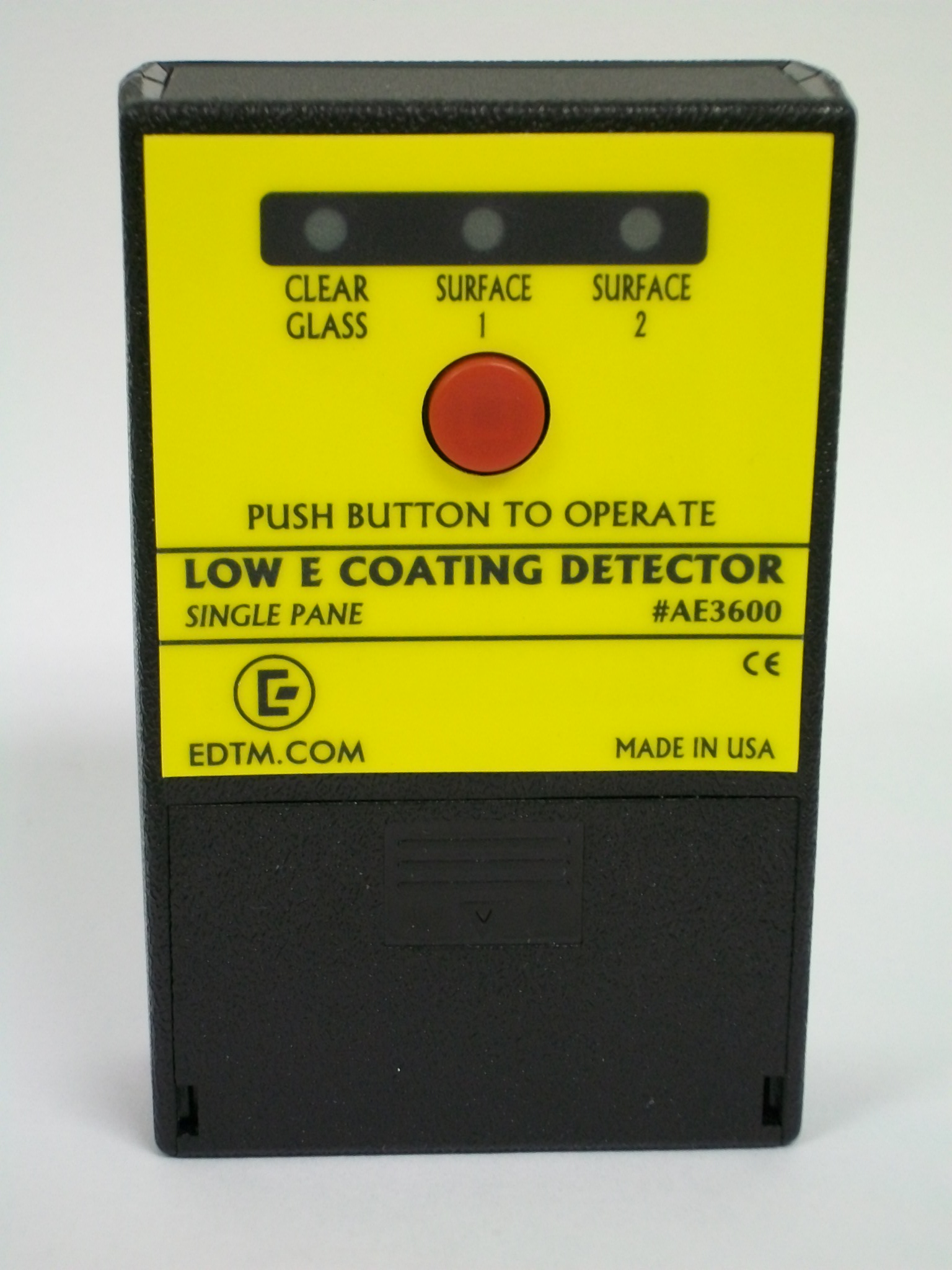
What the AE3600 Does
EDTM describes the AE3600 Single Pane Low-E Coating Detector as a tool that detects Low-E coatings on single pane glass. It checks both surfaces of the glass with one test from a single side, so you do not have to turn the glass over to find out what is on the other face.
When to Use It
• Before cutting or fabricating: confirm the sheet is coated before it goes into production.
• When sorting stock: quickly identify coated and uncoated sheets.
• For quality checks: verify that a sheet matches what was ordered.
How to Use a Single Pane Detector
Follow the instructions that come with the AE3600. In general:
1. Clean the glass so debris does not interfere with the test.
2. Place the detector against the glass from one side as directed.
3. Read the result for both surfaces.
4. Mark or record the result so the coated side is not confused later.
Single Pane vs. Insulated Glass
The AE3600 is built for single sheets. For insulated glass units, a field tool like the ETEKT+ Low-E Detector is a long-standing choice among glaziers. Matching the detector to the glass type is the first step to a reliable result.
Learn More About Detection Methods
If you want to understand how Low-E coatings work and how each detector fits, read the complete guide to Low-E glass detection.
Why the Coated Side Matters Before Assembly
When single sheets are assembled into insulated glass units, the coated surface needs to end up in the intended position. A sheet that is flipped or mismatched can change how the finished unit performs. Testing the sheet before assembly means you know both whether it is coated and which side carries the coating.
Common Single Pane Scenarios
• A glass shop receives mixed stock and needs to sort coated from uncoated sheets.
• A fabricator confirms a sheet before cutting a custom order.
• A technician verifies a replacement lite against what the customer ordered.
A Simple Shop Workflow
1. Test each incoming sheet with the detector.
2. Mark the coated side clearly according to your shop's method.
3. Store coated and uncoated sheets separately.
4. Re-test any sheet that has lost its marking.
AE3600 at a Glance
|
Item |
Details |
|
Model |
AE3600 Single Pane Low-E Detector |
|
Designed for |
Single pane glass |
|
How it tests |
Checks both surfaces with one test from a single side |
|
Listed price* |
$139 |
*The price was listed on edtm.com at the time of writing. Check the product page for current pricing.
Mistakes to Avoid
• Testing glass that is dirty or wet
• Using a single pane tool on an assembled insulated unit
• Forgetting to mark the result after testing
Frequently Asked Questions
Do I need to test both sides of the glass separately?
No. The AE3600 checks both surfaces with one test from a single side.
Is the AE3600 for insulated glass units?
It is designed for single pane glass. For insulated units, see EDTM's other Low-E detectors.
Where is the AE3600 listed?
EDTM lists it in both the field service and manufacturing Low-E detector categories.